A criminal heist, a space mission or a menacing house shapes what we expect from a film. Kubrick works with these recognisable conventions and changes how information, tension and resolution are delivered.
From crime to the institutions that organise violence
The film noir of Killer's Kiss and The Killing relates the city, desire and money to the difficulty of controlling consequences. Its characters plan actions or seek a way out, but the narrative distributes information differently in the two films. Comparing these approaches helps identify shared conventions without reducing the early works to mere exercises in a fixed style.
The war brings together films in which scale, tone and point of view change. A military operation, a trial or the learning of a physical discipline does not offer the same experience. The uniform and the wartime setting identify a context, but are not enough to explain how a film constructs obedience, fear or responsibility.
The satire can operate within that context or turn its attention to other institutions. Dr. Strangelove pits solemn procedures against absurd consequences; A Clockwork Orange examines the political utility of managing behaviour. It is useful to distinguish the object of the critique from the comic devices that make it perceptible.
Science fiction and horror: two ways of managing the unknown
The science fiction genre lets us ask what makes a body, a voice or a behaviour human. In 2001, the construction of technical routines coexists with experiences the characters cannot fully explain. The development of A.I. opens up other questions about affection and creation, while preserving a distinction in authorship: the completed film was directed by Steven Spielberg.
The horror genre creates a different relationship with uncertainty. The Shining turns familiar routes into threatening situations; other works create unease without being classified entirely as horror films. The length of a wait, the absence of an explanation or an off-screen voice can cross genre boundaries.
Comparing these uses means paying attention to the specific experience. The presence of a machine does not turn every scene into a demonstration of technology, just as a violent image is not enough to define horror. What matters is the expectation the sequence sets up and the way it allows or prevents that expectation from being fulfilled.
History and documentary: different ways of organising material
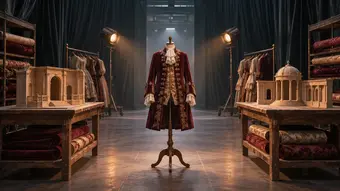
The historical film distinguishes material reconstruction from interpretation of the past. Spartacus and Barry Lyndon select conflicts and relationships through different narrative forms. Napoleon belongs to a different stage of production: its preparatory documents should not be described as scenes from a completed film.
The three documentary short films allow us to compare observation, commentary and commission. A day in the life of a boxer, the work of a priest and the presentation of a trade union do not establish the same relationship with those who appear on screen. Non-fiction also selects and arranges.
These paths suggest comparisons based on questions and methods. A film can use devices from several genres, and the same convention can serve a different purpose from one work to another. Classification is useful when it helps describe those choices, not when it replaces analysis with a single label.
Works referenced: films directed by Stanley Kubrick; documentation on his unrealised projects; Steven Spielberg, A.I. Artificial Intelligence (2001).